Finally I have found a thing
- Rob L K Wood
- May 9
- 2 min read

I found my artifact again.
Right now it is still only a spoon — an object with a history attached to it, a history that carries uncomfortable associations through its use within drug culture. That alone changes the way people look at it. The object already contains tension before anything artistic has even been done to it.
But that is exactly why it interests me.
I do not want to erase that history. I want to transform it.
The spoon is no longer functioning as the thing it once was. It has moved away from utility and toward becoming an artifact. Something recovered rather than used. Something that feels like evidence from a world people half understand.
The next step will likely involve multiplication. One spoon is read literally. Many spoons begin to lose their immediate identity and become something larger, stranger, and more opposing. Repetition changes the emotional weight of an object. A single item can feel personal, but repetition creates ritual, architecture, even menace.
That is where the work begins to move toward ideas of liminality and cosmic horror.
Not horror in the traditional sense of monsters or violence, but horror through scale, ambiguity, and uncertainty. The fear of encountering something that clearly has meaning while being unable to fully understand it. The artifact should feel as though it belongs to a system that exists just outside human comprehension.
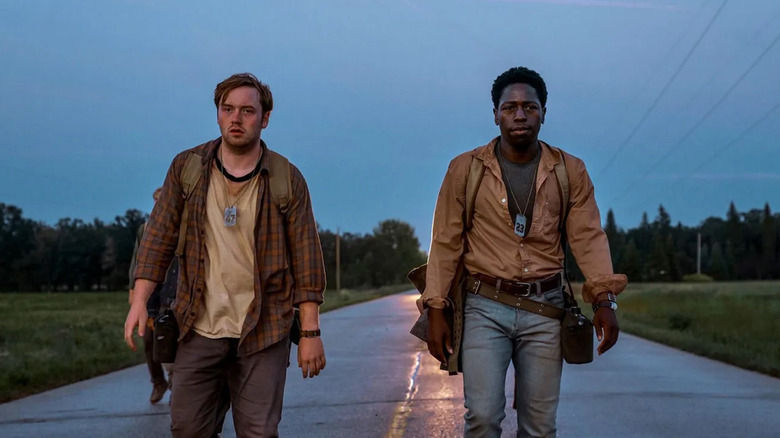
A major influence on this thinking is Stalker. What interests me about Stalker is not simply its aesthetic, but the way it treats environments and objects as spiritually charged. The Zone never explains itself completely. Its power comes from uncertainty. Objects feel important without becoming symbolic in an obvious way.
That is what I want this work to become.
The piece itself cannot be obvious. If the audience immediately understands it, then something is lost. I want it to sit in a space between recognition and uncertainty — familiar enough to trigger memory, but transformed enough to feel displaced from reality.
The environment where the object is photographed or installed matters just as much as the object itself. I am still searching for that liminal space, the place that speaks the same language as the artifact.
Not dramatic spaces, but abandoned or transitional ones:empty corridors,underpasses,industrial edges,flood channels,storage rooms,dead shopping spaces,mist-covered woodland,sodium-lit car parks in the early hours of the morning.
Places where time feels interrupted.
In many ways the work connects back to the idea that we are all stalkers moving through the world. Searching, navigating, surviving, interpreting signs we barely understand. Carrying objects, memories, and systems with us without fully knowing what they mean anymore.
The spoon becomes part of that journey.
Not a tool.Not a symbol.A relic.
Something left behind.Something recovered.Something waiting to be interpreted.


Comments